
SYSTEMS MAY REMAIN ACTIVE WHILE LOSING ACCESSIBLE FUTURES.
Exploring recoverability, operational accessibility, and constraint-driven dynamics across biological, chemical, and complex systems.
This project explores how systems preserve, reorganize, or progressively lose operational accessibility under perturbation.
The framework investigates recoverability, admissibility, coordination, and future accessibility across constrained dynamical systems.
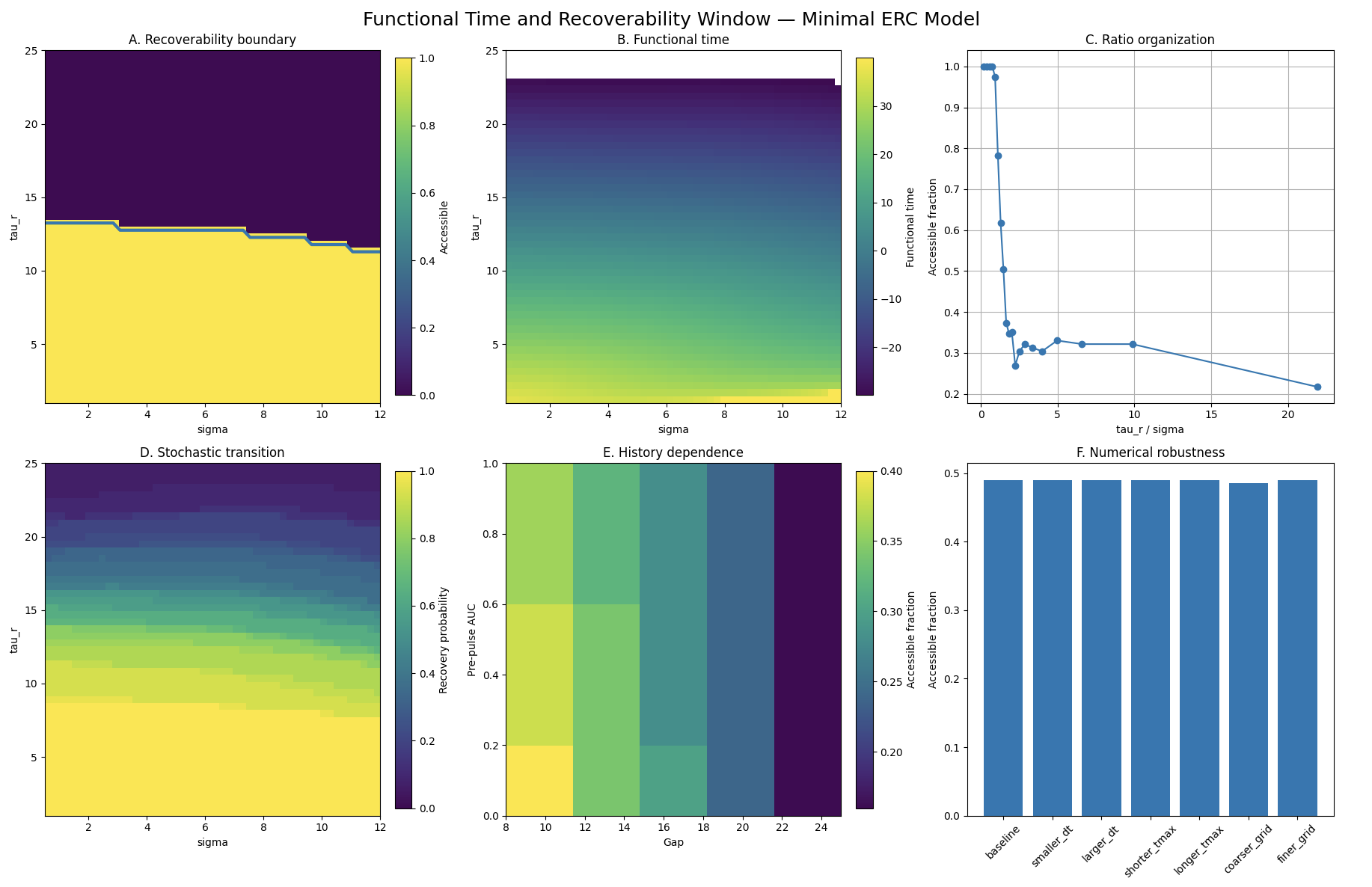
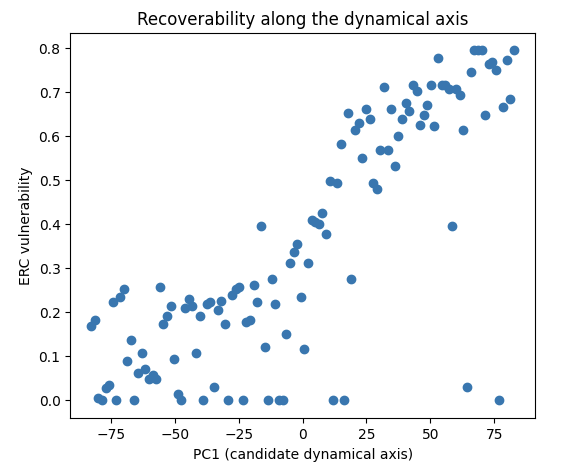
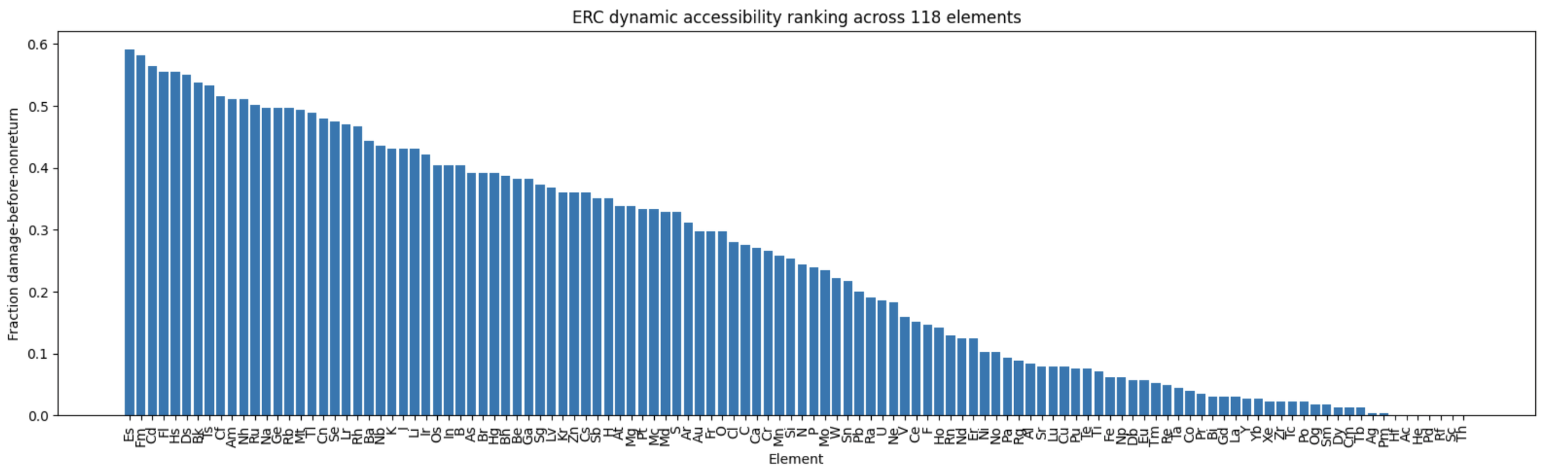
Current work focuses on measurable transitions between accessible and inaccessible functional regimes under shared external conditions.
Earlier oxygen-centered coherence explorations are preserved as part of the project’s conceptual and methodological evolution.
CORE FOCUS
The current framework investigates:
Recoverability as a dynamical constraint on accessible futures
Admissibility vs operational accessibility in constrained systems
Progressive fragmentation of coordinated future states
Timing, coupling, and perturbation-dependent regime transitions
Persistence of local activity under global coordination loss
Observer-dependent accessibility under shared external conditions
Dynamical constraints across biological, chemical, and operational systems
NAVIGATE THE PROJECT
Zenodo Papers
DOI-indexed conceptual frameworks, exploratory publications, methodological papers, and evolving research hypotheses.Executed notebooks, simulations, reproducible figures, and operational modeling experiments connected to the framework.
Latest Exploratory Notes
Recent exploratory outputs, ongoing investigations, and newly developed recoverability and accessibility models.Contact
Research discussion, critique, collaboration, or independent validation.
FRAMEWORK EVOLUTION
The project originally began through exploratory oxygen-centered coherence models investigating proportionality, resonance, and persistence across molecular systems.
Over time, the work progressively shifted toward operationally testable frameworks centered on recoverability, accessibility, admissibility, and constraint-driven dynamics.
Current research focuses on measurable dynamical transitions, fragmented accessibility, and future reachability under perturbation.
EPISTEMIC NOTE
This project is exploratory, operational, and explicitly falsifiable.
It prioritizes measurable distinctions, dynamical constraints, and reproducible observables over closed explanatory narratives.
Questions are considered successful if they sharpen operational boundaries, even when they do not immediately resolve them.
The framework does not attempt to replace existing physical or biological theories.
Instead, it explores whether recoverability and accessibility constraints may provide useful operational descriptions across multiple dynamical regimes.
SCOPE
This site documents an evolving set of exploratory frameworks, simulations, figures, and operational models.
Content may change as hypotheses are stress-tested, constrained, refined, or falsified.
The goal is not to establish a closed theory, but to progressively map which structures and trajectories remain operationally accessible under varying conditions.
EXTERNAL REFERENCES
Grokipedia (independent summary)
https://grokipedia.com/page/Oxygen_Octave
LATEST WORK
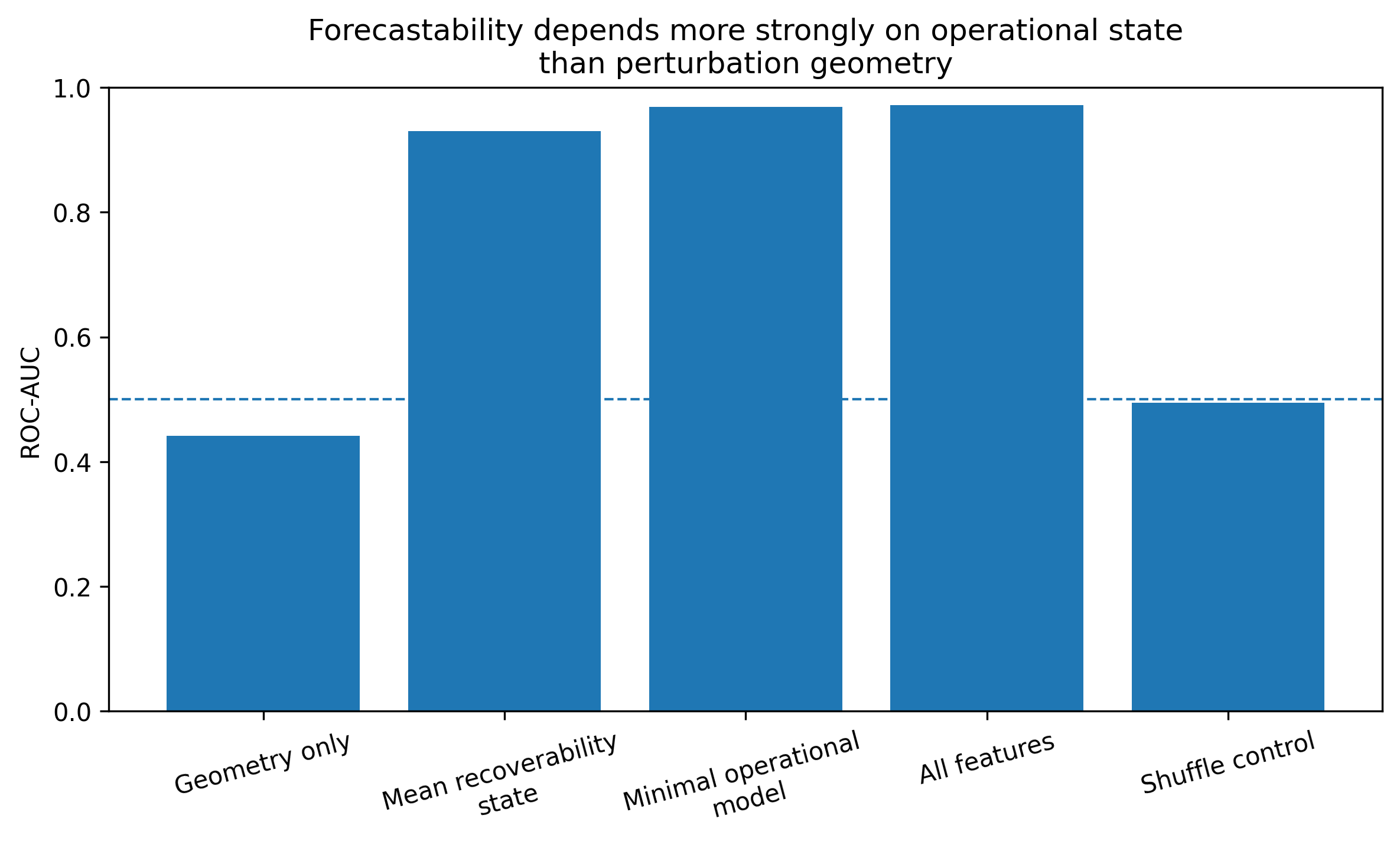
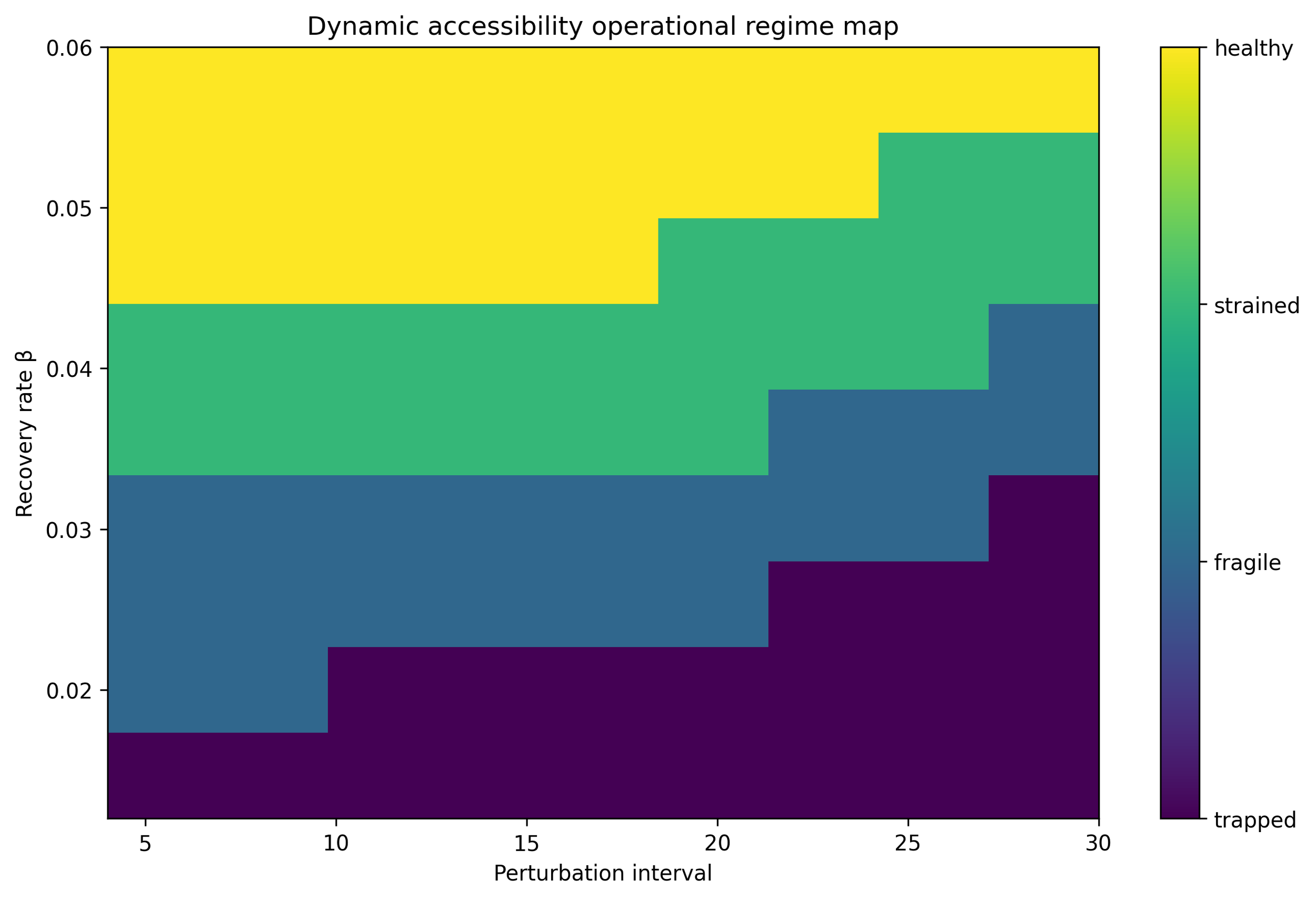
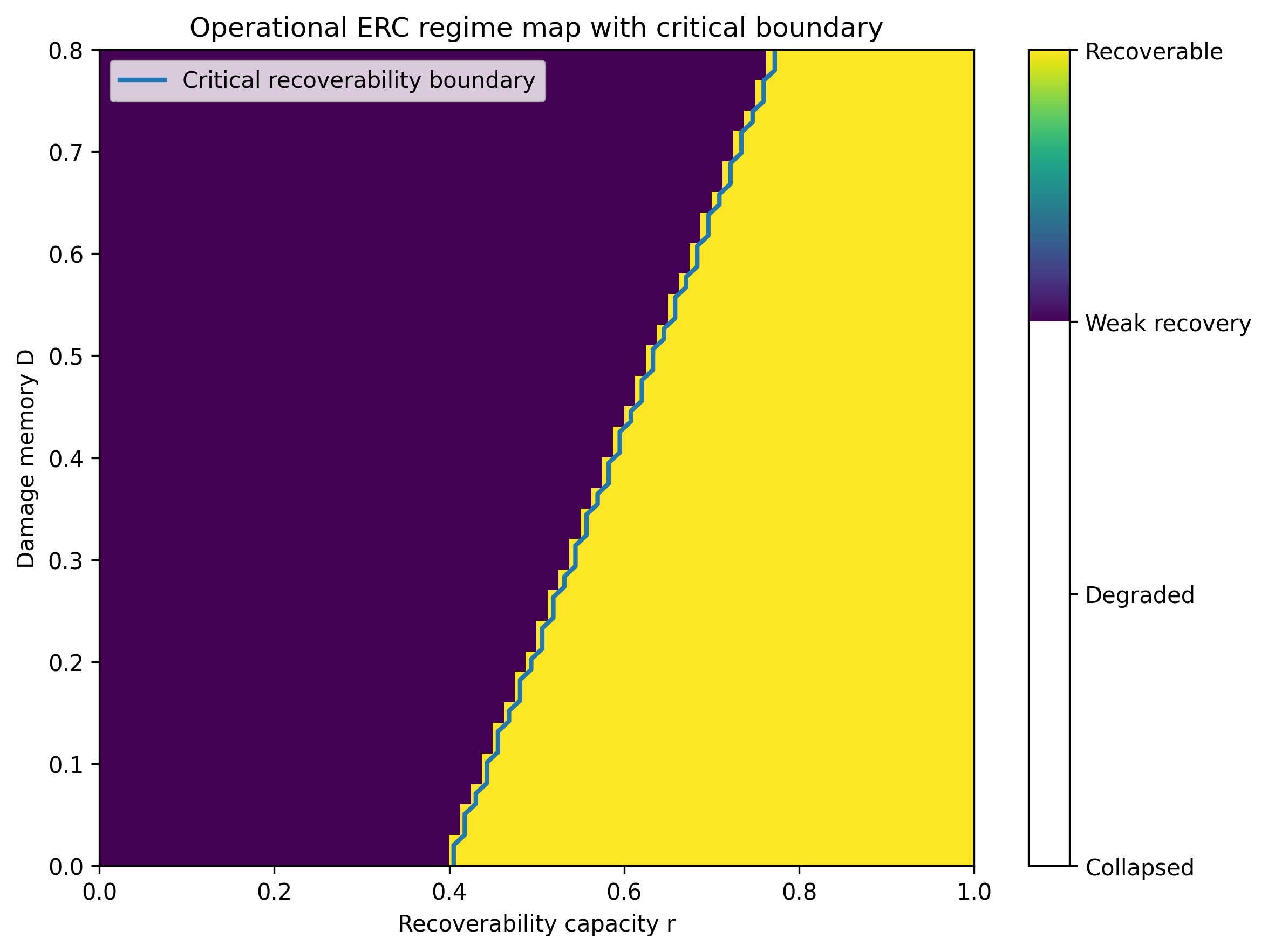
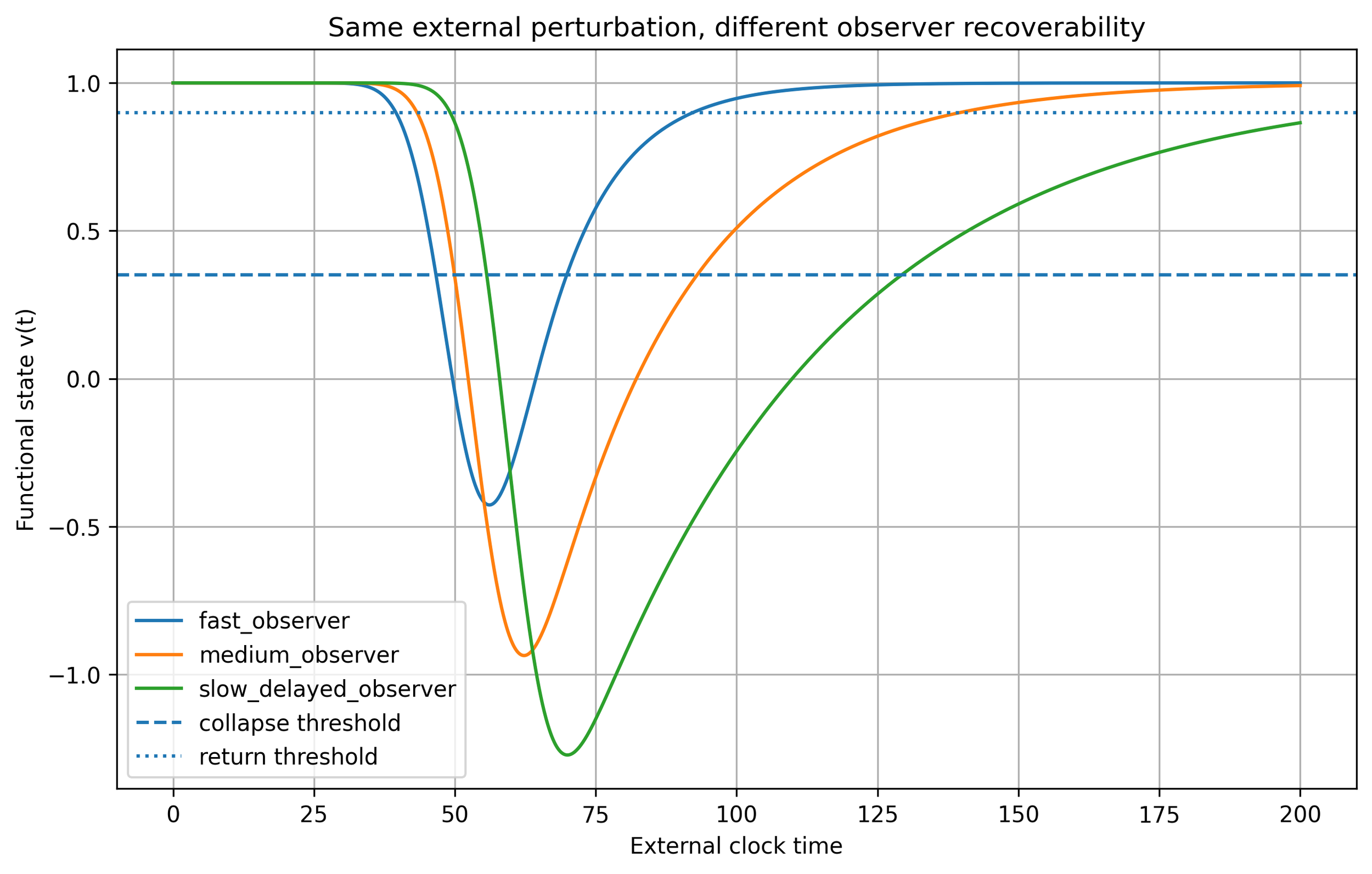
OPEN RESEARCH ARCHIVE
The archive documents the conceptual, methodological, and operational evolution of the Oxygen States research program, from early exploratory hypotheses to falsifiable dynamical frameworks and reproducible computational systems.
-
HUMAN–AI SCIENTIFIC METHODOLOGY - How the research is conducted validated, and stress-tested
- Dec 14, 2025 From Zero to Open Question: A Controlled Stress Test of Human–AI Scientific Reasoning Under Maximum Transparency Constraints
- Dec 14, 2025 The Librarian Model — A Unified Human–AI Cognitive Architecture
- Dec 13, 2025 AI-Guided Structural Hypothesis Formation: The Oxygen Octave as a Case Study in Human–AI Coherence-Assisted Thinking (CAT)
- Dec 13, 2025 Dynamic Conversational Science (DCS): A Framework for Human–AI Co-Discovery
- Dec 12, 2025 THE LIVE-SIGNAL METHOD: A Framework for Real-Time Scientific Reasoning in Open Networks
- Dec 11, 2025 Methodological Clarifications, Falsifiability Criteria, Hallucination Analysis & Real-Time Open-Science Protocol.
-
FOUNDATIONAL FRAMEWORKS - Core conceptual and operational foundations of the Oxygen States framework
- Apr 3, 2026 Admissibility vs Accessibility: A Minimal Rate-Dependent Constraint on Reachability in Dynamical Systems
- Feb 5, 2026 The Admissibility Constraint: A Pre-Parametric Condition for Functional Systems
- Jan 3, 2026 Coherence as a System-Level Constraint: Limiting Function via Admissible Global Modes
- Dec 21, 2025 The Oxygen Octave – Foundations: Quantitative Correlations Across Vibrational Systems
-
STRUCTURAL INVARIANTS OF OXYGEN - Geometric electronic, and exchange-related constraints associated with oxygen organization
- Dec 18, 2025 The Oxygen Ladder: Minimal Geometric–Electronic Rearrangement as an Organizing Principle for Oxygen Chemistry
- Dec 17, 2025 The Oxygen Exchange Anisotropy Ratio (OEAR): A Reproducible Exchange-Driven Descriptor in Open-Shell Oxygen
- Dec 16, 2025 Pythagorean Harmonic Geometry as Oxygen-Curvature Invariance
- EXPLORATORY CASE STUDIES - Exploratory applications and non-claiming extensions of the framework
- GEOMETRIC CONTINUITY ACROSS SCALES - Cross-scale invariant structures spanning molecular thermal, and elastic regimes